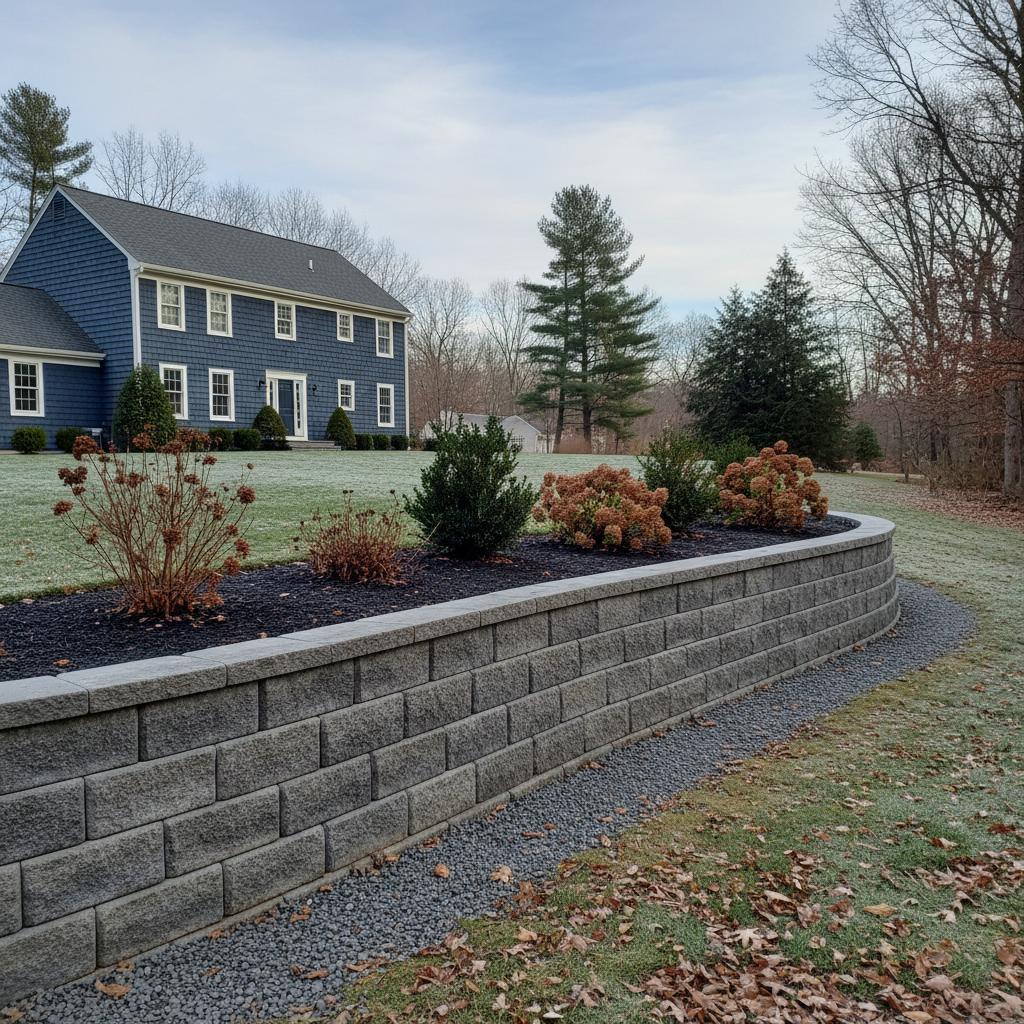
Alright, Cranston homeowners, we need to talk about Concrete Retaining Walls. You might have a sloped yard. You might also have some erosion problems. Or you might just want to create some usable, level space. A well-built Concrete Retaining Wall is a good solution for these things. But here in Rhode Island, our climate has some challenges you need to be ready for. It is not just about putting up a wall. It is about building one that can stand up to our weather for many years.
When is the Best Time to Build a Concrete Retaining Wall in Cranston?
This is a common question we get at Synergy Concrete & Masonry. Timing is important when you are working with concrete. This is especially true with our New England seasons. Generally, spring and early fall are the best times for Concrete Retaining Wall installation.
- Spring (Late March to June): After the ground thaws and before the really hot, humid days start, spring has moderate temperatures. It usually has less heavy rainfall than summer as well. The soil is workable in the spring. The concrete can cure properly without extreme heat or cold.
- Early Fall (September to October): Early fall is similar to spring. It gives us those good moderate temperatures. The ground is usually dry and stable during this time. This is perfect for excavation as well as making sure there is a solid foundation. You want to get the Concrete Retaining Wall work done before the freezing temperatures become regular.
We can build in summer. However, it has some challenges. Hot weather can make concrete dry out too fast. This can lead to cracking if it is not managed carefully. Our team would need to take extra steps for proper curing. This includes pouring in the cooler parts of the day. It also includes using special techniques to keep moisture in the concrete.
Winter is not good for pouring new concrete. Freezing temperatures can stop the curing process completely. This can damage the concrete's long-term strength. The water in the mix can freeze and expand. This causes internal stress and cracks. However, winter is a good time for planning your Concrete Retaining Wall project. Getting your design, permits, and materials sorted out during the colder months means we can start working as soon as the weather gets better in spring.
Weather Conditions That Affect Concrete Retaining Wall Work
Rhode Island's climate is known for its freeze-thaw cycles. We get over 45 inches of rain each year. Those winter months also see temperatures go below freezing regularly. This is not just a small problem. It is an important factor in how we build Concrete Retaining Walls in Cranston.
- Frost Heave: This is a big issue. Cranston is in a region where the frost line can be 36 to 48 inches deep. This depends on your specific spot. When water in the soil freezes, it expands. It pushes upwards as well. If your Concrete Retaining Wall's footing is not deep enough, that expanding ice can lift and shift the wall. This leads to cracks and structural failure. The footing needs to be at least 40 inches deep in mainland Rhode Island. That is why we always make sure to excavate below the frost line. We also use proper drainage behind the Concrete Retaining Wall.
- Rain and Moisture: All that rain means water can build up behind your Concrete Retaining Wall. Without a good drainage system, this water creates hydrostatic pressure. This pressure pushes against the wall. This pressure, in addition to our clay-heavy soils in some parts of Cranston, can cause problems. We put in solid drainage systems. This includes crushed stone backfill as well as perforated pipes. These move water away from the Concrete Retaining Wall's structure.
- Temperature Extremes: As we mentioned, concrete needs to cure properly. The best temperature range is usually between 50 and 90 degrees Fahrenheit. If it is too cold, the concrete will not get strong. If it is too hot, it dries too quickly. This leads to a weaker product.
Protecting Your Concrete Retaining Wall Year-Round
You have put money into a solid Concrete Retaining Wall. Now we need to make sure it lasts. Here is how to protect it through Cranston's changing seasons:
- Make Sure There is Proper Drainage: This is very important. Make sure the drainage system behind your Concrete Retaining Wall is not blocked with leaves, soil, or debris. Clear any downspouts or gutters that might be sending water directly at your wall. Proper drainage stops hydrostatic pressure. It also reduces the impact of freeze-thaw cycles.
- Keep an Eye on the Soil: Look for any signs of soil washing away from the top or sides of your Concrete Retaining Wall. Erosion can expose the foundation. It can also hurt the stability of the soil the wall is holding back.
- Inspect for Cracks: Concrete is very strong. However, small cracks can show up. Watch for any new cracks. Also watch for any cracks that are getting wider. Small hairline cracks are often just on the surface. But larger or expanding cracks could mean a bigger problem. If you see anything concerning, call Synergy Concrete & Masonry.
- Think About Sealing: Putting on a good concrete sealer can add more protection. It helps keep water out. It also resists stains. It protects against the damaging effects of freeze-thaw cycles as well as de-icing salts. This is especially important for the face of the Concrete Retaining Wall that is exposed to the weather.
- Avoid Heavy Loads: Do not put too much weight or heavy equipment directly on top of your Concrete Retaining Wall. Do not put it too close to the wall either. This can put too much stress on the structure.
A well-maintained Concrete Retaining Wall can last 50 to 100 years. By understanding our local climate and taking these seasonal steps, you are protecting your investment. You are also making sure your Cranston property stays stable and looks good for many generations.