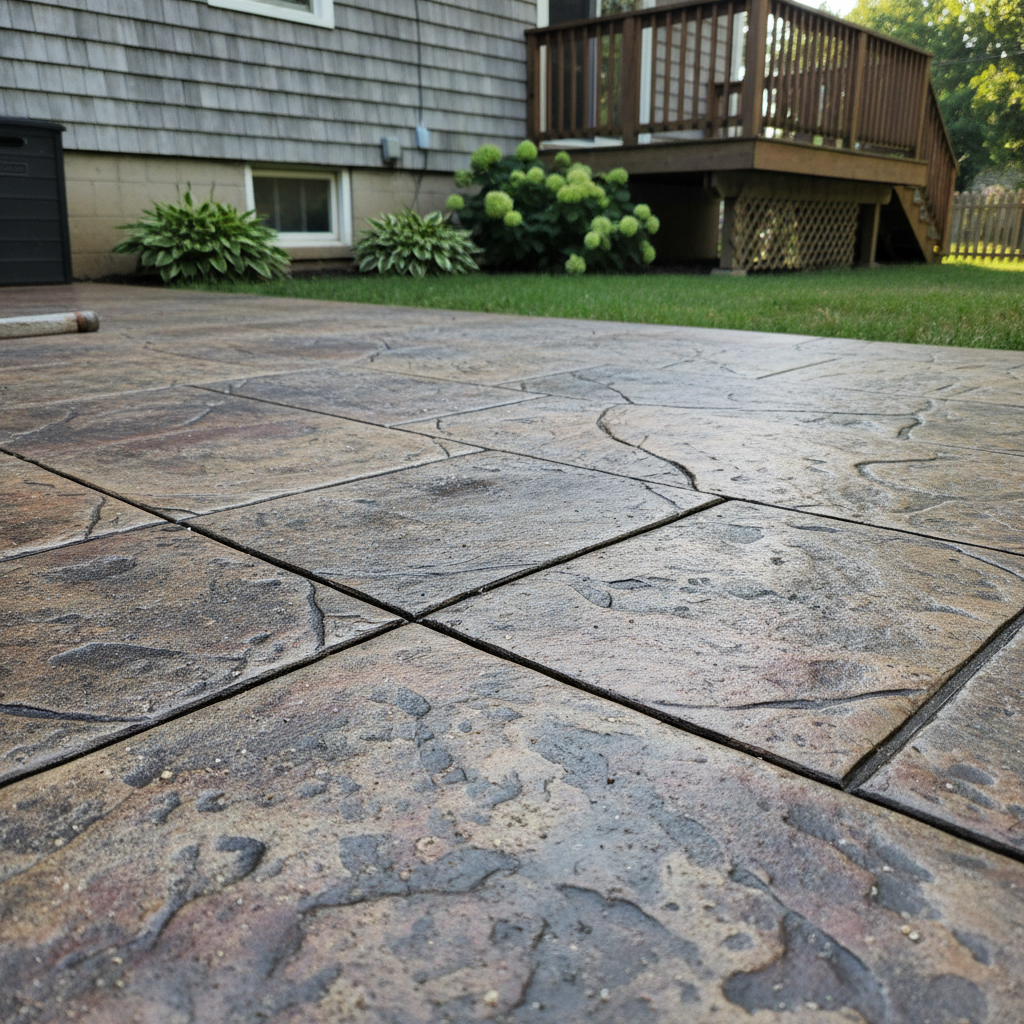
Want to upgrade your plain gray backyard slab into something that actually catches the eye? Stamped and Stained Concrete can completely change the look of your outdoor living space without the massive price tag of natural stone. But before you grab a rental stamp mat or a bucket of acid stain, you need a clear plan.
Here is how to handle a decorative concrete project from start to finish, and where to draw the line between a weekend DIY and calling in a local crew.
Before the Pour: Planning and Prep
Getting decorative concrete right starts way before the truck arrives. If you live around Cranston, you know our local weather throws everything at us, from freezing winter dampness to baking summer sun. If your base is not prepped correctly, your brand-new Stamped Concrete patio will not survive a single New England freeze-thaw cycle without cracking or shifting.
- Map out your layout and check for underground utility lines.
- Dig out enough depth to lay a solid, compacted gravel base.
- Choose your patterns and colors carefully—remember that darker Stained Concrete colors absorb more heat in the July sun.
During the Project: The Execution Phase
Timing is everything with Stamped and Stained Concrete. The moment the mix hits the forms, a ticking clock starts. You have a very narrow window to float, color, stamp, or texture the surface before the concrete sets up too hard.
If you are tackling this as a DIY project, keep your pours small. Pouring a massive section by yourself is a recipe for a botched pattern or uneven color blending. Synergy Concrete & Masonry uses specialized multi-person crews because once stamping begins, nobody has time to take a break.
After the Project: Curing and Sealing
Once the decorative surface is stamped or stained, the work is not over. Concrete needs time to cure properly, and Stained Concrete finishes demand high-quality sealers to protect against moisture, de-icing salts, and fading.
- Keep foot traffic off the new Stamped Concrete surface for at least 2 to 3 days.
- Apply a breathable, UV-resistant sealer once the slab has fully dried out.
- Plan to reapply a fresh coat of sealer every 2 to 3 years to keep the colors rich and protected.
What You Can DIY vs. When to Call a Pro
Homeowners need to look at what makes sense for their skill level. If you are looking at acid-staining an existing, structurally sound patio in your backyard, that is a very manageable weekend DIY project. You clean the slab, roll or spray the Stained Concrete treatment, neutralize it, and seal it.
However, if you are talking about pouring fresh concrete, integrating complex color Hardeners, and executing a crisp Stamped Concrete pattern over a large area, leave it to the professionals. One mistake with timing or stamp alignment ruins the entire look permanently, and tearing out bad decorative concrete is expensive and heartbreaking.
If you want it done right the first time without the back-breaking labor and stress, Synergy Concrete & Masonry provides Stamped and Stained Concrete services for homes and businesses in Cranston.